Summer Stars at The Great Auditorium
featuring
Mada and Hugh Piano Duo, Piano 4-hands
Thursday, June 25, 2026
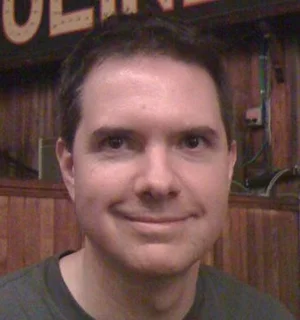
Mada and Hugh Piano Duo
The Mada & Hugh Piano Duo, comprised of Romanian-born pianist Mădălina-Claudia Dănilă and Korean-American pianist Hugh Sung, stands at the forefront of innovative 4-hand piano performances. Their dynamic partnership has captivated audiences worldwide, earning them prestigious accolades, including first prize at the 2024 London International Competition and the 2023 Charleston International Competition, as well as second prize at the 2024 American International Competition. In 2025 they performed a recital as part of the George Enescu Festival in Bucharest, Romania, one of the world’s most important classical music events. They are proud members of the Petrof Art Family, representing Petrof pianos in their performances.
Mădălina-Claudia Dănilă, an internationally acclaimed concert pianist, has mesmerized audiences globally with her profound artistry and versatility. She has triumphed in numerous prestigious competitions, including the International Piano Competition in Vigo, Spain, and the Charleston 20th Century Music Competition. Recently, she was invited by world-renowned violinist Anne-Sophie Mutter to debut a solo piano recital at the Ruhr Klavierfestival in Germany, one of the most prestigious piano festivals in the world. Mădălina is currently pursuing her Doctor of Musical Arts (DMA) in piano at Temple University, further honing her skills and expanding her academic achievements.
Hugh Sung is celebrated as one of the finest collaborative pianists of his generation. His distinguished career includes performances and recordings with renowned artists such as Aaron Rosand, Hilary Hahn, Julius Baker, and flutist Jasmine Choi. He has worked extensively with the Philadelphia and Baltimore Symphony Orchestras and served for 19 years at The Curtis Institute of Music in Philadelphia as Director of Student Recitals and Instrumental Accompaniment. Hugh co-founded AirTurn, a company that pioneered digital sheet music with hands-free page-turning pedals, and taught for nine years on the ArtistWorks platform, where he worked with students around the world through its innovative video exchange system. He currently serves as Vice President of Cunningham Piano Company, representing Yamaha and Bösendorfer pianos.
Together, Mădălina and Hugh bring a unique blend of classical mastery and modern innovation to their performances. Their repertoire spans from timeless classics to their own dazzling arrangements of popular tunes, thrilling audiences with exceptional artistry and creativity. The Mada & Hugh Piano Duo continues to enchant listeners across the globe, establishing themselves as a formidable force in the world of piano duos. Their collaboration not only showcases their individual talents but also creates a synergy that elevates their performances to new heights.
PROGRAM
3 Preludes
arr. by Mada & Hugh
George Gershwin
(1898–1937)
Hoe Down from Rodeo
arr. by Mada and Hugh
Aaron Copland
(1900–1990)
Serenade No. 8, Op. 62
Vincent Persichetti
(1915–1987)
A bene placido
Con grazia
Con calore
Semplice
Coreopsis
(arr. for 1 piano, 4 hands by Po-Sim Head and Kowoon Lee)
Florence B. Price
(1888–1953)
Selections from Souvenirs, Op. 28
Samuel Barber
(1910–1981)
Waltz
Pas de deux
Two Step
Hesitation-Tango
Table d’Hote – Musical Delicacies for Piano 4 Hands
Vee Lawnhurst and Muriel Pollock
Hors d’oeuvres
Soup
Entrée
Salad
Parfait
Demi-Tasse
“America” from West Side Story
arr. by Mada & Hugh
Leonard Bernstein
(1918–1990)
About the Composers
George Gershwin
(1898–1937)
George Gershwin was an American composer and pianist whose work bridged popular music and classical traditions, making him one of the most influential figures in 20th-century American music. Born Jacob Gershwine in Brooklyn to Russian-Jewish immigrants, he began his career as a song plugger in Tin Pan Alley before achieving fame as a Broadway composer alongside his lyricist brother Ira. His concert works—including Rhapsody in Blue (1924), An American in Paris (1928), and the opera Porgy and Bess (1935)—fused jazz harmonies, blues idioms, and classical forms in ways that defined a distinctly American sound. Gershwin's career was cut short when he died of a brain tumor at age 38, but his catalog of songs (“Summertime,” “I Got Rhythm,” “Embraceable You”) and orchestral pieces remains central to the American repertoire.
Aaron Copland
(1900–1990)
Aaron Copland (November 14, 1900 – December 2, 1990) was one of the most influential and celebrated American composers of the 20th century, often referred to as the “Dean of American Composers.” Born in Brooklyn, New York, to Lithuanian Jewish immigrant parents, Copland studied in Paris with the renowned pedagogue Nadia Boulanger before returning to the United States to forge a distinctly American sound in classical music. He is best known for his populist works from the 1930s and 1940s, including the ballets Appalachian Spring (which won the Pulitzer Prize for Music in 1945), Billy the Kid, and Rodeo, as well as Fanfare for the Common Man and the Lincoln Portrait, all of which incorporated American folk melodies, jazz elements, and wide-open harmonies that evoked the American landscape and spirit. Beyond composition, Copland was a tireless advocate for American music, serving as a teacher, conductor, writer, and mentor to younger generations of composers, and his influence extended across concert halls, Hollywood film scores, and the broader cultural understanding of what American classical music could be.
Vincent Persichetti
(1915–1987)
Vincent Persichetti was an American composer, teacher, and pianist who became one of the most prolific and influential figures in 20th-century American music. Born in Philadelphia, he demonstrated extraordinary musical precocity, heading the theory department at Combs College of Music at age 20 while simultaneously studying at the Curtis Institute and the Philadelphia Conservatory. He joined the Juilliard School faculty in 1947, where he taught composition for four decades and mentored generations of American composers including Philip Glass, Steve Reich, and Einojuhani Rautavaara. Persichetti composed in virtually every genre—producing nine symphonies, twelve piano sonatas, and numerous concertos—but is perhaps best known for his substantial contributions to wind band literature, with works like Symphony No. 6 and Divertimento for Band becoming cornerstones of the repertoire. His music synthesized diverse influences from modal counterpoint to jazz harmonies within a distinctive tonal language, and his textbook Twentieth-Century Harmony (1961) remains a standard pedagogical resource.
Samuel Barber
(1910–1981)
Samuel Barber was an American composer known for a lyrical voice that balanced modern clarity with romantic expression. Born in 1910 in West Chester, Pennsylvania, he showed remarkable musical talent from an early age and entered the Curtis Institute of Music as one of its first students. Barber’s music includes orchestral, operatic, choral, and chamber works, yet he is best remembered for Adagio for Strings, a piece that became one of the most beloved American compositions of the twentieth century. His opera Vanessa earned a Pulitzer Prize, and he received a second Pulitzer for his piano concerto, confirming a reputation as a leading figure in American classical music. Barber died in 1981, leaving behind a legacy of emotionally direct works that continue to resonate with performers and audiences.
Vee Lawnhurst and Muriel Pollock
Vee Lawnhurst and Muriel Pollock were a groundbreaking piano duo active in the late 1920s and early 1930s, known for their energetic performances on vaudeville stages and national radio broadcasts. Vee Lawnhurst (1905–1992), a gifted pianist and composer, was a prominent figure in Tin Pan Alley, writing hits such as “Accent on Youth” and “Cross Patch” that were performed by artists like Duke Ellington, Benny Goodman, and Fats Waller. Muriel Pollock (1895–1971), a classically trained pianist and Broadway arranger, composed for musical productions including Rio Rita and Shoot the Works, and performed widely in silent films and on radio. Pollock offered a strong rhythmic foundation while Lawnhurst dazzled with spirited improvisations, creating a compelling musical balance. Their collaboration even reunited for a 1941 NBC Behind the Mike broadcast, where they performed classic duets like “Frenesí” and “I Hear a Rhapsody”.
Leonard Bernstein
(1918–1990)
Leonard Bernstein was an American composer, conductor, pianist, and educator whose compositions fused classical forms with jazz, Latin rhythms, and Broadway idioms to create a distinctly American sound. Born in Lawrence, Massachusetts, he studied at Harvard and the Curtis Institute before his legendary 1943 debut with the New York Philharmonic launched his conducting career. As a composer, Bernstein achieved his greatest popular success with the musical West Side Story (1957), whose score—featuring “Maria,” “Tonight,” and “Somewhere”—remains a landmark of American theater. His other stage works include On the Town (1944), Wonderful Town (1953), Candide (1956), and Mass (1971), commissioned for the opening of the Kennedy Center. In the concert hall, his output includes three symphonies—Jeremiah (1942), The Age of Anxiety (1949), and Kaddish (1963)—as well as the Serenade after Plato’s Symposium (1954) for violin and orchestra and the Chichester Psalms (1965). Though his conducting career with the New York Philharmonic and his televised Young People’s Concerts brought him international fame, Bernstein often lamented that these pursuits left him too little time to compose, and his relatively modest catalog belies the ambition and craft of his best work.